
Setting financial goals can feel exciting at first, but sticking to them is where most folks hit a wall.
Writing down goals like “save more money” or “pay off debt” sounds easy, but daily life takes over, and these priorities often fade away.
That’s why I rely on vision boards. They make my financial ambitions visible and inject an emotional spark, pushing me forward.

Creating a vision board for financial goals isn’t just gluing images together. It’s about getting real clarity and making your ambitions front and center in your daily routine.
Each time I see my board, it’s like getting an inspiring nudge toward a future I genuinely want.
In this guide, I’ll walk you through eight practical steps I use to set financial goals with a vision board.
Ready to move your goals from wishful thinking to something tangible and real? This step-by-step approach will help you get there.
Why Vision Boards Work for Financial Goals
Vision boards get results because they bring your goals to life visually and emotionally, not just as words jotted down somewhere.
When my financial dreams are mapped out in front of me, it’s easier to focus. Visualization helps train my brain to seek out opportunities and prompts me to make choices that support my objectives.
Seeing my vision board helps me pick out what I truly want, making it easier to make wise decisions—like saying no to unnecessary splurges because I’m focused on bigger priorities.
That emotional drive keeps me moving, even when it feels easiest to postpone things.
The board bridges the gap between everyday choices and long-term goals. Glancing at it daily keeps my biggest aspirations fresh in my mind, cutting through the noise of distractions.
Looking for ways to keep your money goals on track?
Check out these tips for sticking to your financial goals. If your money mindset sometimes feels like an obstacle, take a look at my guidance for overcoming money mindset blocks.
1. Define Clear and Specific Financial Goals First
Before hunting for pictures or pinning anything down, I spend time thinking hard about my exact financial targets.
Vague ideas such as “get rich” are too unclear to be effective.
Instead, I set goals with clear numbers: “pay off $10,000 in student loans,” “save $5,000 for a vacation,” or “grow side income to $1,000/month.”
Including both short-term objectives—like a three-month savings challenge—and longer-term ambitions such as homeownership or financial independence, helps me measure real progress.
Some of these goals can feel daunting, but as long as every target is specific and practical, I keep moving toward them.
It’s far better to skip wishy-washy ideas and set out exactly what you want to track and eventually celebrate.
2. Break Big Financial Goals Into Visual Categories
Organization has a huge impact, especially if you’re juggling several money goals at once.
I break down my board into easy-to-follow categories so there isn’t any random clutter:
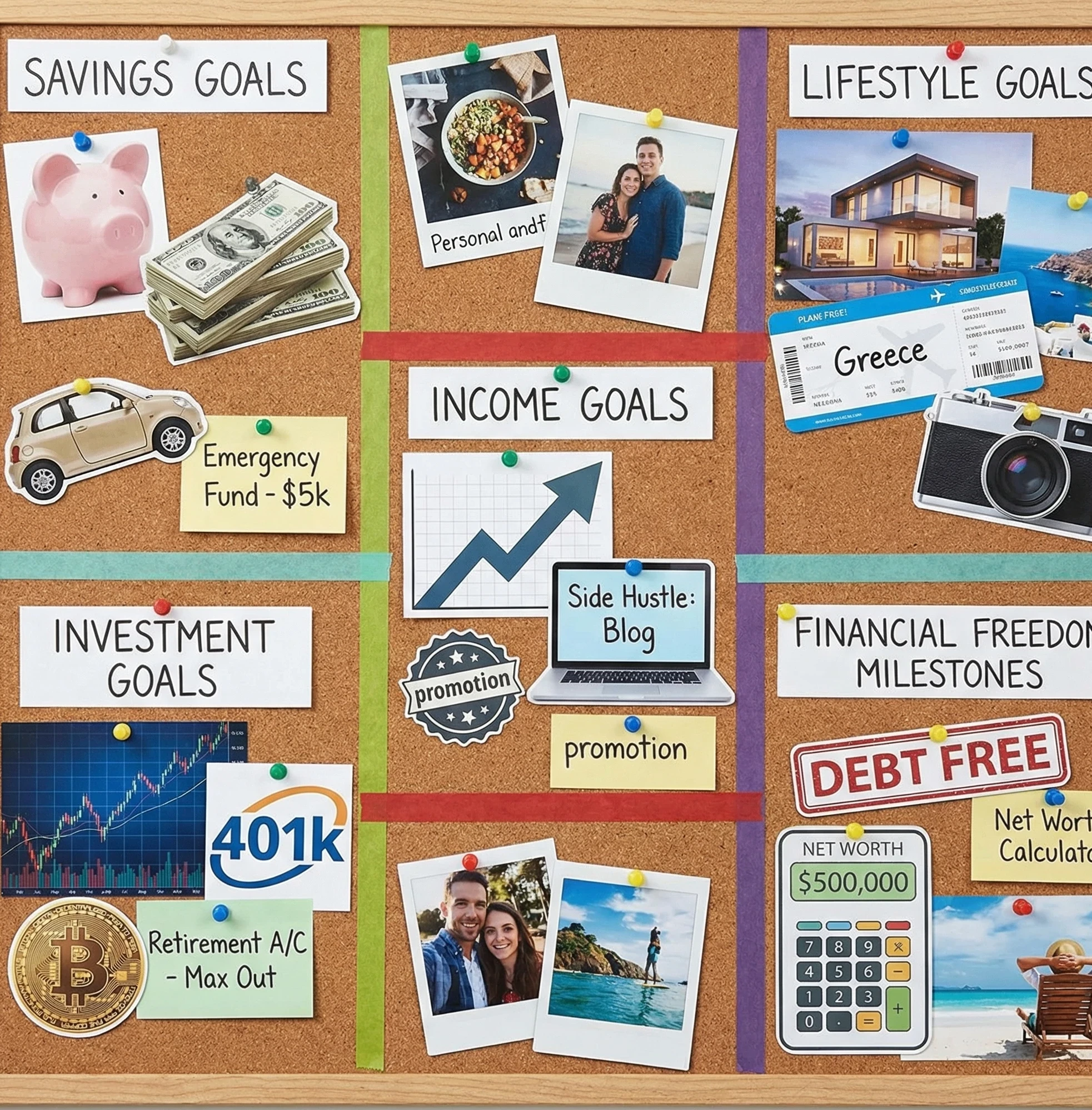
- Savings goals: These could include emergency funds, vacation savings, or a down payment for a home.
- Investment goals: Things like maxing out retirement accounts or building a specific-sized portfolio.
- Income goals: Maybe earning a raise, starting a business, or kicking off a freelance gig.
- Lifestyle goals: What you want to do with your money, like traveling, relocating, or enjoying time with loved ones.
- Financial milestones: Getting debt-free, reaching Coast FIRE, or buying a rental property.
Breaking my vision board into clearly defined visual sections gives every goal its own space and makes it easier to keep my focus instead of feeling overwhelmed by everything at once.
3. Choose Images That Represent Financial Outcomes
For each area of my board, I look for images that really resonate. Each picture should tie directly to an outcome I want.
Want to shake off debt?
I use images like “paid” stamps, zero balances, or symbols of freedom. Saving for that dream vacation? I paste photos that match the destination.

For income goals, I include images of cash, upward graphs, or laptops (perfect for my side hustle goals).
Investment dreams are all about visuals like plants growing out of coins or surging charts.
The secret is to use images that really mean something to me, connecting with my goals and keeping the board personally inspiring.
4. Add Specific Numbers and Deadlines
Details matter.
For each goal, I add sticky notes, text tags, or write directly on the board the exact dollar amounts and dates I want to hit them.
For example, “Save $1,500 for a laptop by October 1” or “Pay down $500 monthly in credit card balances.”
Sometimes, drawing a simple timeline or color-coding a progress bar makes it easier to track how close I am to my next milestone.
Having a target date keeps me focused and adds gentle pressure, pushing me to avoid procrastinating when it would be easy to let things slide.
If you want guidance for investment goals, check out my step-by-step guides on building a balanced investment portfolio as well as starting investing with a small budget.
5. Place Your Vision Board Where You’ll See It Daily
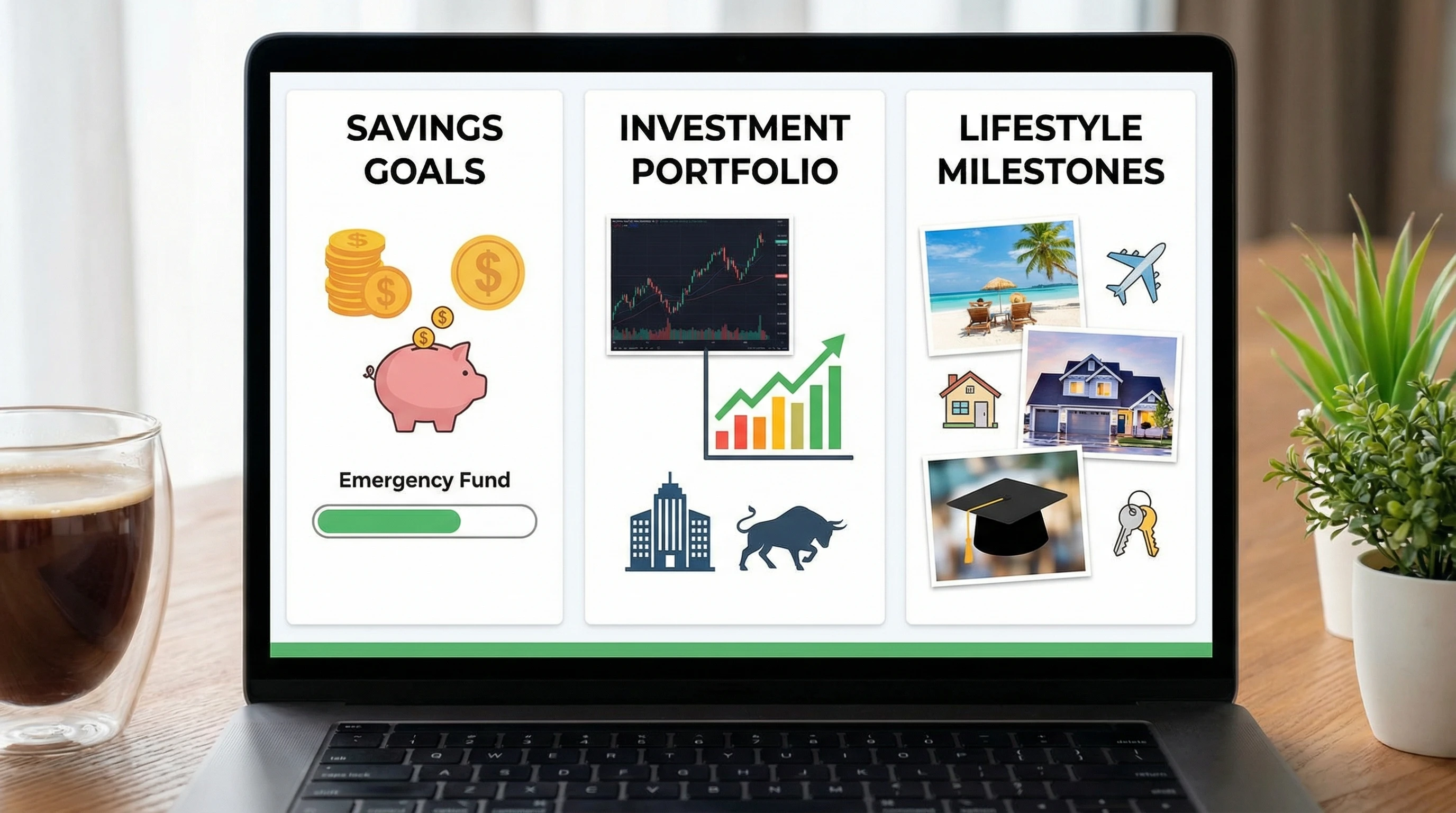
I always make sure my board is where I can’t ignore it: on my desk, by my bed, or even as a digital wallpaper on my phone or laptop. Digital boards, made with Canva or Pinterest, are a great option if you want portable motivation and work on the go.
The main thing is making sure I run into my board every day. Regular reminders help anchor my ambitions in my daily decisions, guiding little choices that fuel big wins over time. Those small, consistent nudges help my subconscious mind do a lot of the heavy lifting for me.
6. Align Your Daily Financial Habits With Your Vision
Looking at a vibrant board does nothing if I’m not matching actions to images. I review my budget to check my spending and habits versus the goals I’ve mapped out. Automating savings, setting up spending alerts, and planning weekly check-ins help hold me accountable.
Mini-habits create momentum. For instance, if my board shows a paid-off card, I make a weekly payment routine and track visible progress next to that visual. Every action, even the small ones, helps me stack wins toward my big goals.
7. Update and Adjust Your Vision Board Quarterly
Change is constant, and my board should reflect my reality. Every quarter, I sit down to review what’s shifted—new jobs, unexpected bills, or a finished goal.
I swap out images, adjust numbers, or add new dreams. Tracking wins lets me spot progress, making all that effort feel worthwhile. Tweaking my board keeps the content fresh, renewing my motivation and showing where I’m making headway.
8. Combine Visualization With Skill Building and Income Growth
Imagining my best life isn’t enough—I need to grow my skills and income, too. So, I focus on building one skill at a time, whether it’s learning investment basics, gaining a new side-hustle skill, or beefing up my professional qualifications.
Every time I pick up a new skill, my capacity to achieve what’s on my board expands. For example, understanding index funds let me target bigger investment goals. Picking up digital marketing helped me earn on the side. Teaming up your big vision with skill growth works better than waiting for your dreams to “magically” show up.
Common Mistakes When Using Vision Boards for Money Goals
- Vague goals: “Be rich!” sounds great, but it won’t keep your focus for long. Drill down into clear, measurable, timed goals.
- Not reviewing regularly: If you only see your board every so often, it won’t give consistent reminders or spark action.
- Ignoring actionable steps: It’s easy to get lost in fun images, forgetting to establish weekly or daily habits that move you forward.
- Treating it as motivation only: Motivation alone doesn’t get results. Vision boards work best when you use them alongside real financial systems, reminders, and progress tracking.
Takeaways: Turning Visualization Into Financial Freedom
Vision boards shift financial goals from abstract ideas to something I see and connect with daily. That steady focus nudges me toward better choices and stronger habits.
Over the weeks and months, blending daily action, regular check-ins, and constant skill growth creates the momentum you need to crush financial goals.
If you want your financial dreams to turn into something real—not just a wish at New Year’s—a vision board is well worth trying. Set your destination, then let your new skills, systems, and solid habits carry you there.
Ready to Match Your Vision With Real Income?
Building a vibrant vision board is only step one.
If you want those dreams to show up in your bank account, you’ll need a plan for skill growth and income. I always recommend tracking down good training programs that dig into real digital skills, so you can start earning online—even if you feel totally new to it.
Want to build a stable, flexible income from scratch?
👉 Check out my #1 recommended training platform here for step-by-step support on building your own easy-to-follow income stream.
This platform is called Wealthy Affiliate. It’s the same beginner-friendly platform tha I signed-up to back in 2015. They have everything that you need to get started with building an online business witha solid foundation, and they incorporate the latest A.I. technology whilst you learning those business-building skills.
Click on the image to create your free Wealthy Affiliate starter account, or you can check out my detailed Wealthy Affiliate review here.
Free Access to the STARTER MEMBERSHIP which includes:
- 8-lesson core niche training
- WA help/community access (2.5 + million members)
- 7 days of coaching/mentoring from me
- And more…

Regards and Take Care
Roopesh